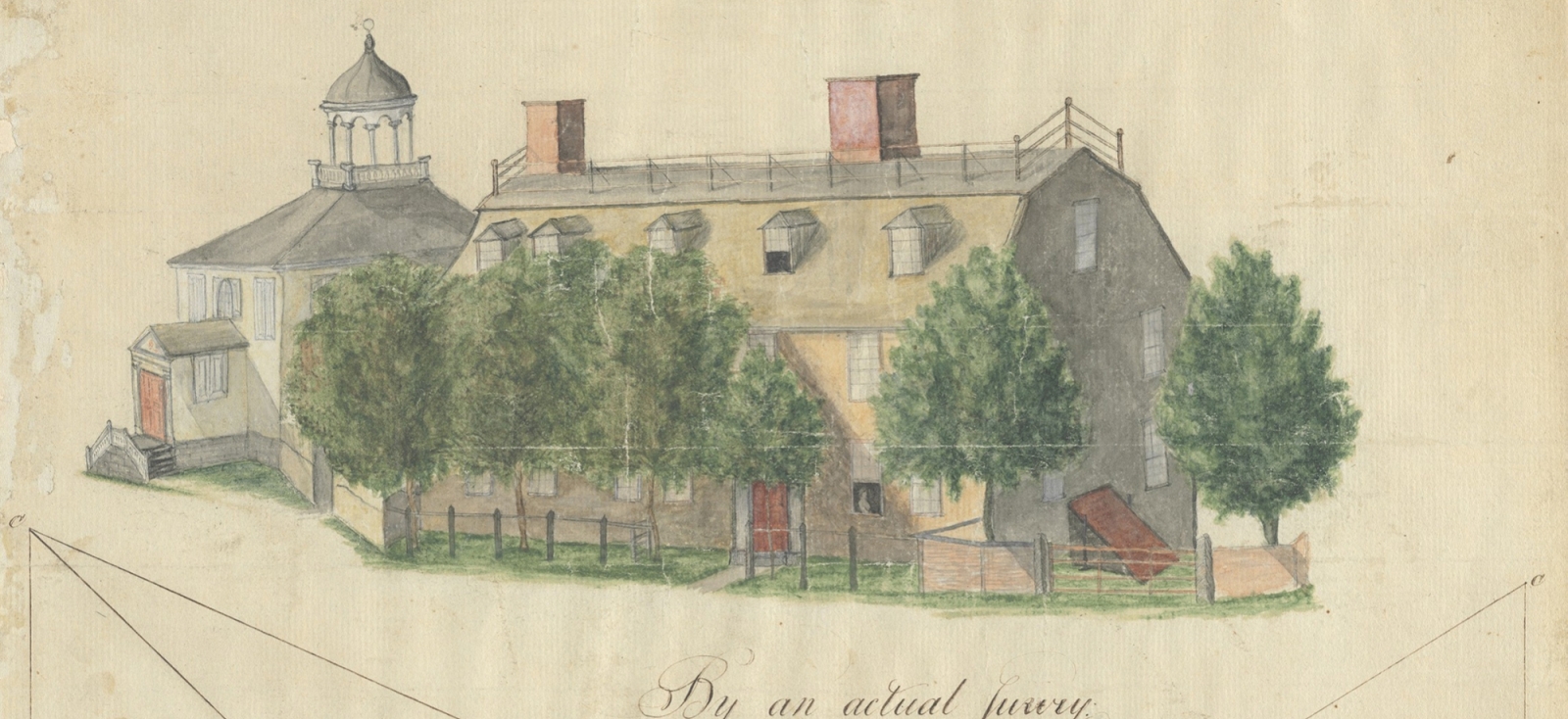
The Harvard University Archives’ collection of theses, dissertations, and prize papers documents the wide range of academic research undertaken by Harvard students over the course of the University’s history.
Beyond their value as pieces of original research, these collections document the history of American higher education, chronicling both the growth of Harvard as a major research institution and the development of numerous academic fields. They are also an important source of biographical information, offering insight into the academic careers of the authors.
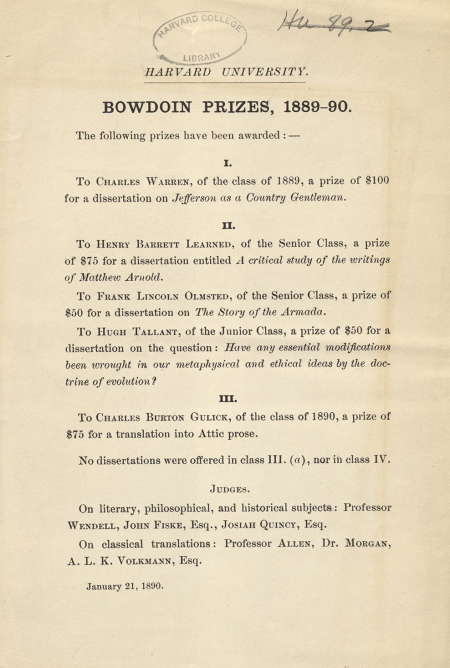
Spanning from the ‘theses and quaestiones’ of the 17th and 18th centuries to the current yearly output of student research, they include both the first Harvard PhD dissertation (by William Byerly, PhD 1873) and the dissertation of the first woman to earn a doctorate from Harvard (Lorna Myrtle Hodgkinson, EdD 1922).
Other highlights include:
- The collection of Mathematical theses, 1782–1839
- The 1895 PhD dissertation of W. E. B. Du Bois, The suppression of the African slave trade in the United States, 1638–1871
- PhD dissertations of astronomer Cecilia Payne-Gaposchkin (PhD 1925) and physicist John Hasbrouck Van Vleck (PhD 1922)
- Undergraduate honors theses of novelist John Updike (AB 1954), filmmaker Terrence Malick (AB 1966), and former U.S. Poet Laureate Tracy Smith (AB 1994)
- Undergraduate prize papers and dissertations of philosophers Ralph Waldo Emerson (AB 1821), George Santayana (PhD 1889), and W.V. Quine (PhD 1932)
- Undergraduate honors theses of U.S. President John F. Kennedy (AB 1940) and Chief Justice John Roberts (AB 1976)
What Does a Prize-Winning Thesis Look Like?
If you're a Harvard undergraduate writing your own thesis, it can be helpful to review recent prize-winning theses. Explore HOLLIS to find catalog records for past prize winners at Harvard University Archives or other Harvard libraries. The FAS Prize Office also lists all of the Thomas Hoopes Prize winners since 1999 on their website.