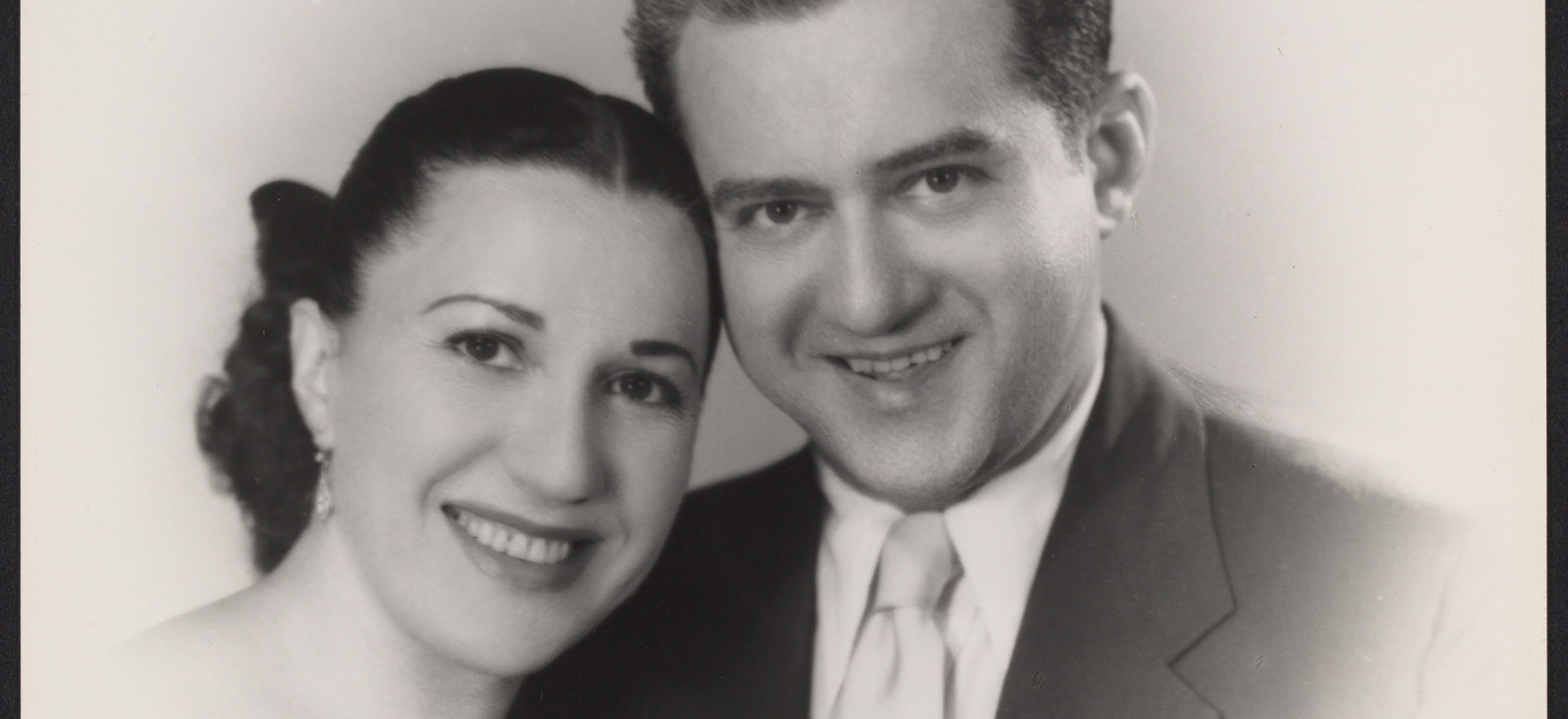
The romantic idols of Yiddish musicals, Seymour Rechtzeit (1914-2002) and Miriam Kressyn (1910-1996) rose to fame in Yiddish theater and film. But their legacy was on the radio, where for decades they blended Yiddish language and sensibilities with American pop culture to create a brand of entertainment all their own.
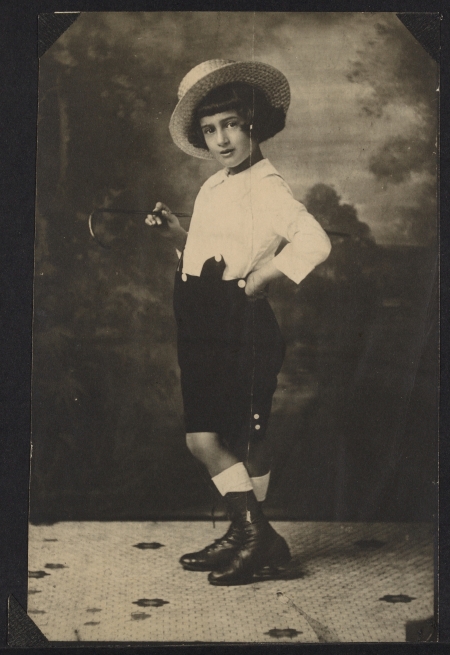
Seymour Rechtzeit (stage name: Rexite) began his career as a child prodigy: at age 9 he sang for the U.S. Congress and Calvin Coolidge. As an adult, his high, sweet tenor voice made him a matinee idol, as he sang for over a dozen radio shows a week, crooned in Billy Rose’s nightclub, acted in Yiddish theater productions, and starred in one of the first full-length Yiddish films with sound: Mayn Yidishe Mame (1930).
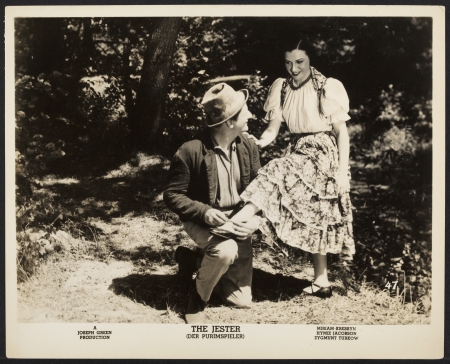
By the time Miriam Kressyn married Seymour Rechtzeit in 1943, the young soprano already had a lengthy international resume: she had spent the previous decade touring with shows in Europe, the United States, South America and South Africa. She also had begun a film career, starring in Der Purimshpiler (1937), one of the last Yiddish movies filmed in Poland before World War II.
Kressyn and Rechtzeit enjoyed great popularity as a team, first in Yiddish musicals and then on radio until the 1990s. Kressyn was also a talented translator who wrote Yiddish lyrics to American popular standards—and vice-versa. These translations featured in most of their radio programs, particularly Memories of the Theater, in which they shared firsthand accounts of American and Yiddish theater. Rechtzeit also served as president of the Hebrew Actors Union, giving him an in-depth familiarity with all aspects of show business.
The Seymour Rechtzeit Jewish Theater Collection includes:
At the heart of the collection are over 1,300 rare audio recordings of Rechtzeit and Kressyn’s radio programs. These unique resources give researchers the opportunity to listen to Rechzeit and Kressyn reminisce about their lives and careers, hear Kressyn’s song translations performed, and explore their unique insights into American and Yiddish theater in the 20th century. A detailed finding aid for the audio recordings is now available.
"My Yiddish theater studies began at Harvard Judaica in 1995, researching Joseph Buloff's direction of Yoshke Muzikant, a play that influenced a teenage Eugene Ionesco in Romania in 1924 and starred Buloff's wife Luba Kadison, who became my teacher and friend for the last ten years of her life. When I told Seymour how beautifully the Buloff-Kadison archives were preserved at Harvard, he decided to donate his archives there and we spent many afternoons in his Greenwich Village apartment packing them up to send. Having his archives in the Harvard Library was also particularly meaningful to Seymour because his late wife, Miriam Kressyn, grew up in Boston and still has family in the area. Seymour Rechtzeit and Miriam Kressyn were not only stars of Yiddish theater and radio, but oral historians who knew many of the great artists of Tin Pan Alley, the Yiddish theater and Broadway, sharing their music, influence and life stories in both Yiddish and English for over fifty years on WEVD. This one of a kind archive, is sure to inspire the next generation of theater artists and historians and I am thrilled that the finding aid is available online, after many years of careful work by the stellar librarians at Harvard Judaica."
—Caraid O'Brien, Yiddish translator and actor
Accessing These Materials
- The Rechtzeit and Kressyn Radio Programs Archive has a detailed finding aid.
- The Rechzeit and Kressyn papers are described in HOLLIS.
- The photographs from the Rechzeit Collection have been digitized.
- Physical materials from the Rechtzeit Collection, including audio recordings, can be consulted in Widener Library Reading Room by appointment. Request access through HOLLIS Special Request, or email us.