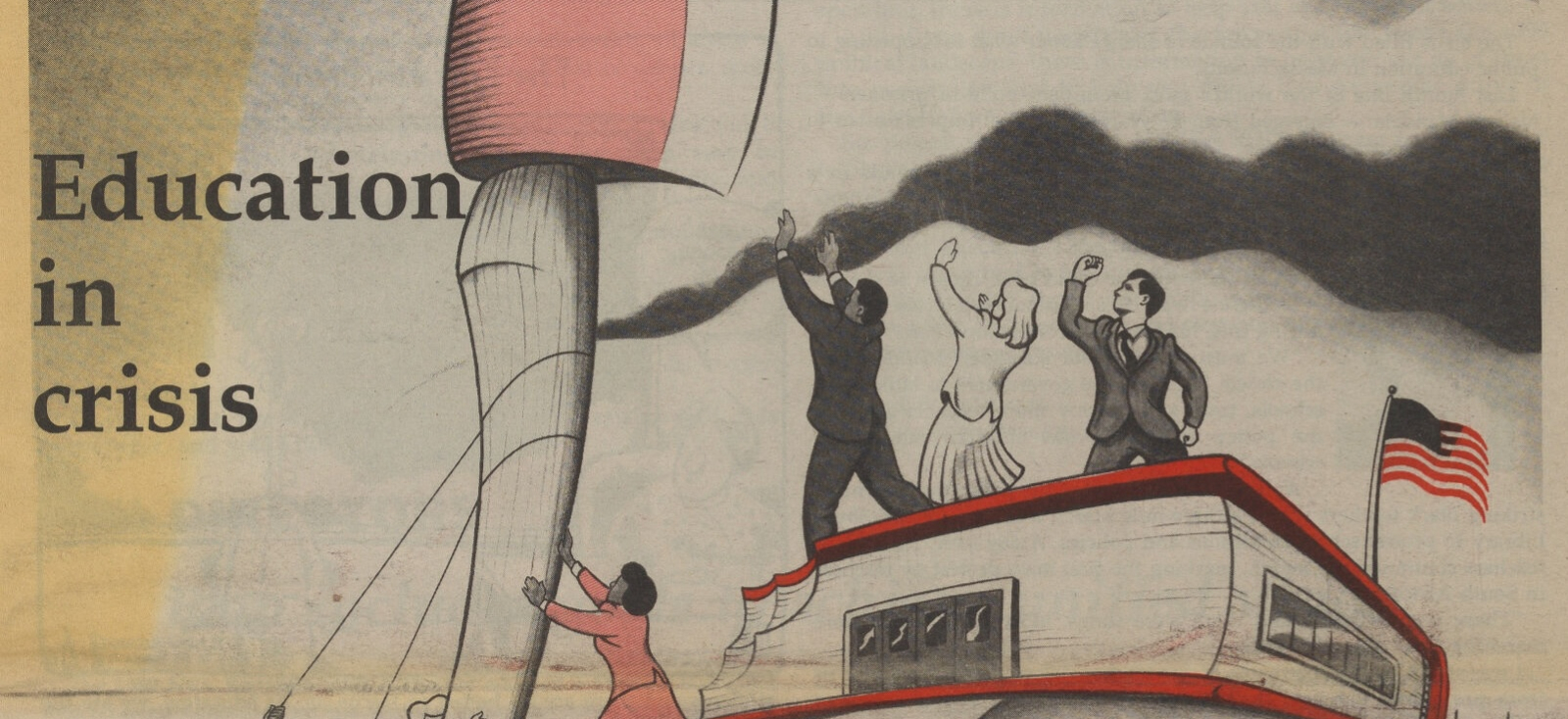
The Massachusetts Teachers Association, founded in 1845, is one of the oldest teachers’ organizations in the United States. It was established to give teachers a voice at a time when public schools as we know them were just beginning to take shape. Today, the MTA has about 117,000 members across 400 affiliates and is the largest union in the state.
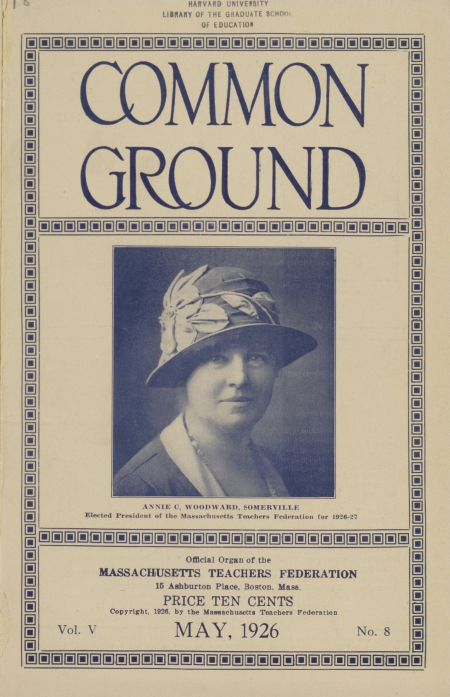
This collection of MTA publications, held by the Gutman Library at the Harvard Graduate School of Education, offers insight into educators’ values and actions over time. These publications trace the organization’s growth in membership, staff, and power as educators gained collective bargaining rights.
The collection includes copies of MTA publications from 1848 to today, including many that are available online.
History of MTA Publications
The MTA has changed its structure, name, and publications several times since its 1845 founding. By late 1874, membership dwindled, and the MTA stopped publishing its own journal for 40 years.
Then, in the early 20th century, a group of members formed an offshoot organization called the Massachusetts Teachers Federation. The MTF published a journal called Common Ground from 1914 through 1931. Common Ground, like the MTF itself, focused more on teachers’ rights and interests than on pedagogy, with tenure, pensions and minimum salaries topping the list of concerns.
In 1919, the MTA merged with the MTF, drawing together their shared aims to further amplify and empower the voices of teachers, explaining in a hand-scrawled letter “To the Historian” that it was doing so “to further promote education in Massachusetts by allying with the more modern and potent organization.” The MTF changed its publication’s name back to The Massachusetts Teacher in 1931.
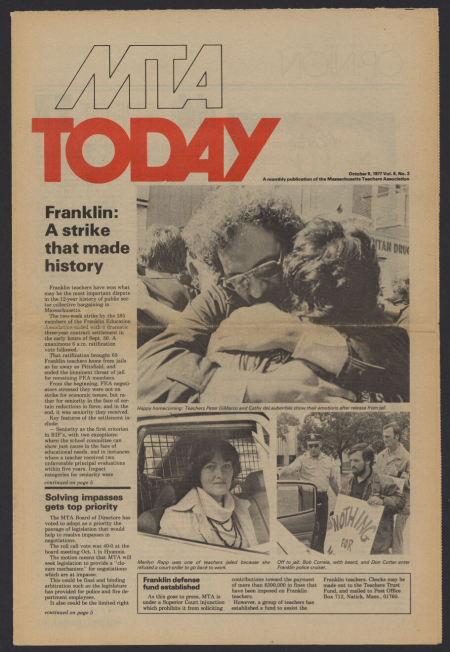
In 1972, the MTA started a new publication called MTA Today to highlight union news, while continuing to publish The Massachusetts Teacher through September 1981. MTA Today has been published ever since.
Highlights of Teacher Advocacy from the Publications
As documented in MTA Today, school funding battles were commonplace in the 1970s and 1980s, leading to more than 50 strikes. In that era, the MTA began representing classroom aides and other education support professionals, along with most of the higher education faculty and staff at the state's public universities and colleges.
Policy debates were covered by MTA publications in depth, including how to hold schools accountable without relying too heavily on standardized tests and what role college faculty should have in making tenure decisions.
The rights of women educators were also prominent. For example, the MTA fought the dismissal of teachers when they became pregnant, a practice that was ruled unconstitutional in 1974. Throughout its history, the MTA has vigorously defended the right for equal pay for comparable work through legislative advocacy and collective bargaining, while contextualizing the concerns of Massachusetts teachers in national debates on education.
An example of their advocacy and guiding principles can be found in an early plea published in The Massachusetts Teacher in 1848: “The opinion of one schoolmaster is worth infinitely more than that of a hundred theorizers. Let us have no more plans of education from those who have never educated.”
Echoes of that same sentiment are found in MTA Today’s coverage of a rally in 1999, when more than 10,000 educators gathered on the Boston Common under the slogan: “If you want to know how to make schools work better, ask a teacher.”
Accessing These Materials
Portions of this collection are available online. The full collection is available for in-library use. Learn more about using special collections at Gutman Library and contact the library if you have questions.