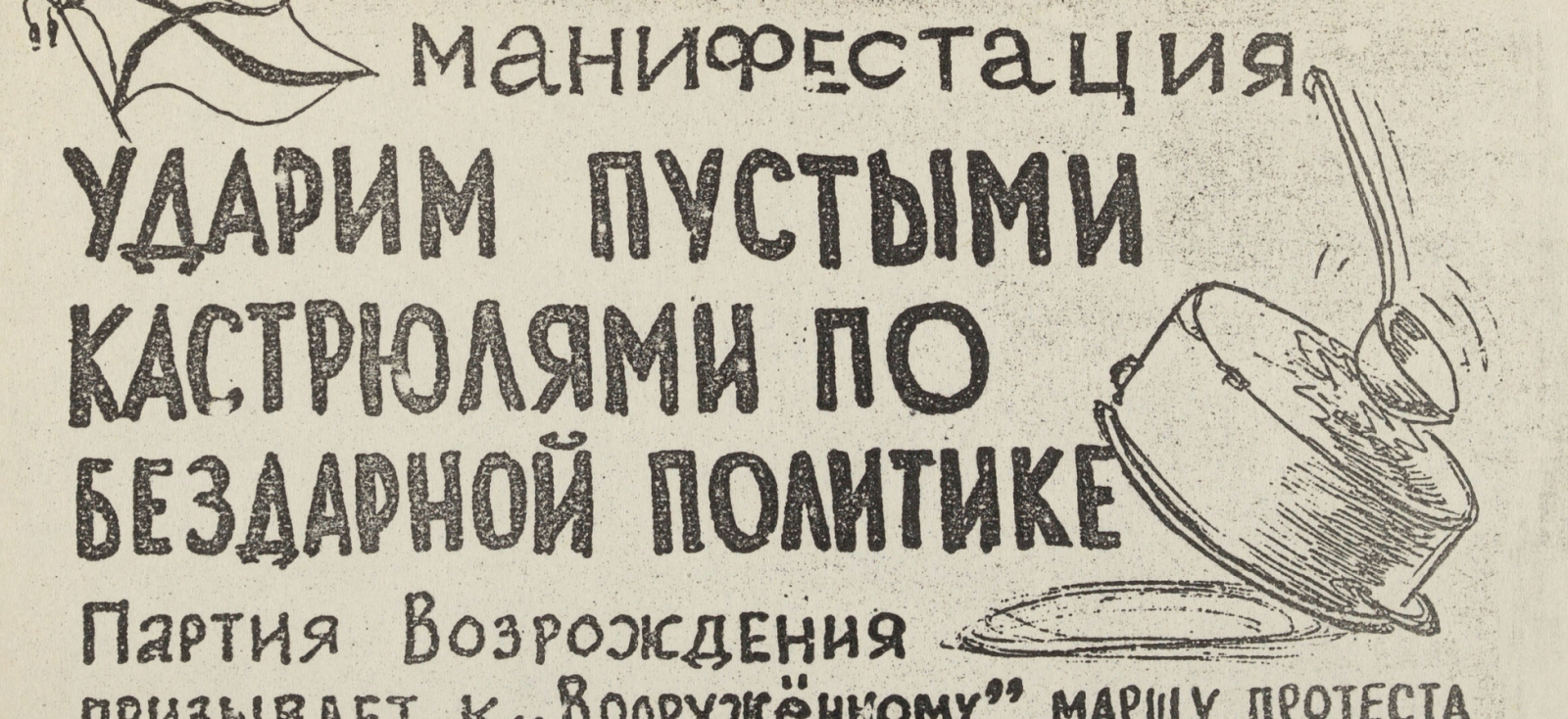
The late 1980s and 1990s were marked by profound transformations that led to the decline and eventual collapse of the Soviet Union and the emergence of its successor states. Harvard Library’s collection of late-Soviet and post-Soviet ephemera documents this vibrant and pivotal period, through materials related to the political events, movements, parties, and personalities that shaped public life across the Soviet Union and its successor states between 1987 and 1999.
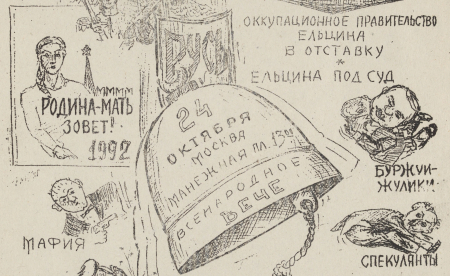
The policy of glasnost (openness and transparency), introduced by Mikhail Gorbachev during the perestroika era (1985–1991), unleashed an unprecedented wave of independent and non-traditional publishing across the Soviet Union. Its impact extended beyond books and periodicals to encompass virtually any object created to communicate information, regardless of how ephemeral its intended use.
This collection includes rally fliers, political party and movement publications, campaign brochures, event invitations, meeting agendas, posters, photographs, and special issues of periodicals. It also includes campaign materials such as calendars, stickers, envelopes, notebooks, and buttons featuring party symbols.
While most materials originate from Moscow, the collection also includes documents from other regions of Russia, as well as from other Soviet republics and their successor states.
Accessing These Materials
The items in this collection are digitized and available online. For details, explore the guide to the collection.
The original documents can be requested through the HOLLIS Catalog for in-person use in the Widener Library Reading Room. Learn more about working with special collection and archives at Harvard Library.